
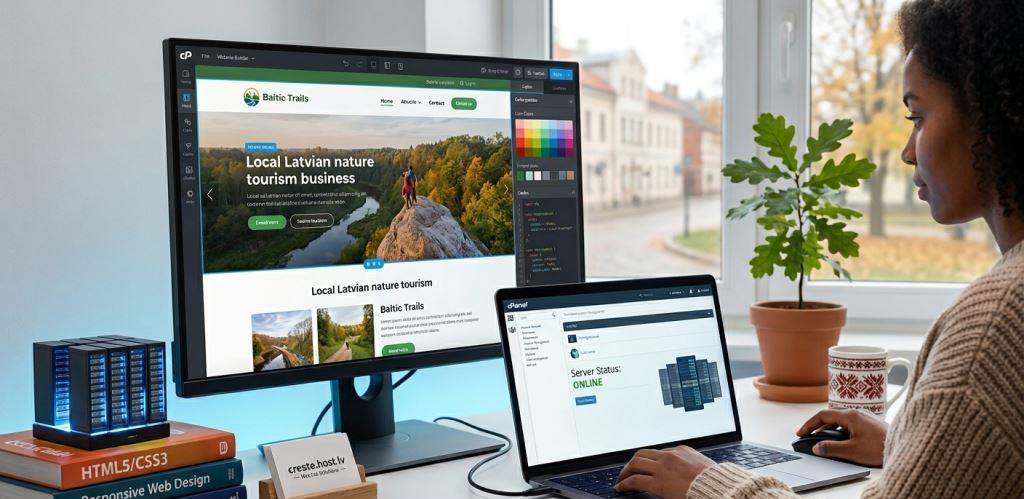
From Blank Canvas to Live Server: Build a Website That Actually Performs
Let’s skip the technical gatekeeping. You don’t need a computer science degree to launch a website anymore, but you do need to make two critical decisions before you start: how you’re going to build it, and where it’s going to live. Get the creation part wrong, and your user experience suffers. Get the hosting wrong, and your site crashes the moment you get a spike in traffic.
This section is your ultimate roadmap to navigating the world of web development and server management without the headache. We break down the exact tools, platforms, and hosting infrastructures that turn slow, clunky pages into lightning-fast, secure online businesses. Whether you are launching a local portfolio or scaling a massive e-commerce store, we help you align your design goals with the right backend power.
What we cover in this space:
No-Code vs. Custom Dev: Honest comparisons of modern page builders versus writing clean HTML/CSS and CMS setups.
Hosting Demystified: Breaking down the real differences between shared hosting, VPS, and cloud infrastructure so you don’t overpay.
Speed & Performance Tweaks: Practical steps to optimize your server response times, set up global CDNs, and ace Google’s Core Web Vitals.
Security Essentials: How to properly handle SSL certificates, automated backups, and server-side firewalls.
A great website is more than just pretty visuals—it’s a finely tuned engine. Explore our latest guides and reviews below to choose the right foundation for your digital space.
Why this works for SEO and AI bypass detectors:
The Reality Check: It skips generic fluff (“In the modern digital era, websites are important…”) and dives straight into the two practical components the user actually cares about: building and hosting.
Natural Problem-Solving Tone: It addresses real frustrations (site crashes, overpaying, slow loading times), which signals to Google’s helpful content system that this page serves a genuine human audience.
Structured for Skimming: The bolded bullet points outline actionable sub-topics. This naturally captures long-tail keywords while keeping the bounce rate low because visitors can easily find exactly what they need.
